Aquarius Monthly Horoscope
★
★
★
★
★
★
★
★
★
★
★
★
★
★
★
★
★
★
♒ Horoscopes for Aquarius
An Aquarius is the eleventh sign, the last sign of the Water trigon, engulfed in a multitude of virtues. These include vision, tolerance, independence, originality, charity, and individuality. However, its most fascinating quality, the one that truly separates it from the other signs, is the degree to which it is in-tune with the fifth dimension surrounding our planet Earth. The traditionally identified three dimensions are those of length, height, and width. The fourth dimension is that of time, and together the four define the spacetime continuum. The fifth dimension, however, is one, which we can ascend to with our level of consciousness and the willpower of the mind. The Aquarius finds it especially easy, without even realizing the inner alignment of their minds to this fifth dimension, the environment where conscious intentions can realize itself into changes with lighting speed. These are not only the conscious intention and actions of the Aquarius representatives themselves, but also of their celestial allies and foes.
New paradigms of mind manifest themselves on this plane, enabling the Earth's denizens - and especially the Aquarius to be in harmony with the cosmic forces. To grasp control over this powerful connection and the edge that the Aquarius possesses, he or she requires an instrument to serve as a medium between the short-term future of the celestial movement and the current mental preparation for the upcoming events, as well as the manipulation of the energy application towards best-suited results.
This instrument is the horoscope. The quintessential purpose of the horoscope for the Aquarius to awaken the minds of the Earthly denizens to such virtues as liberty and freedom, so that these virtues could flow through the actions of humanity and the events that transpire around it.
Through the harmony with celestial forces of the planets within our planetary Solar System, only achieved through the alignment of the passive and active energies of the Aquarius to their most optimal points of application, will allow every representative of this sign to experience some part of the cosmic consciousness.
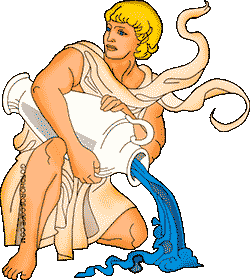
However, to achieve the alignment of the passive and active energies of the Aquarius to where they would be at their apex requires some foresight of where the celestial forces will be allocated - which planets will be at play over the arena of this particular sign and in what function. The horoscope is a tool that should be employed by the Aquarius to note these celestial forces, as it can both provide the information you need and the interpretation of this information delivered straight to the reader, with the reader having only one thing left to do - to act. The Water Bearer sign is comfortable with acting, and so, with the proper use of the horoscope instrument, representatives of the Aquarius sign may assert domination over their lives, planet, and future. The days of darkness and the disconnection from the cosmic heritage arising from the planet are rapidly ending for someone in the unique position to make that happen. That unique position is being a member of the Aquarius House, the House most connected to the mysterious fifth dimension of the cosmic influences.
GotoHoroscope's mobile App for your Zodiac sign. Available on Google Play
Google Play and the Google Play logo are trademarks of Google LLC.
Comments: Aquarius Monthly Horoscope
Had around 6 or 7 job opportunities/contacts this month. Went with the only one that felt "Right". Have worked my butt off the past year, guess it payed off now!
For all those of you commenting on how or when you will get a job: NO ONE - not even the universe - will give you a job. Only you can secure your future job, not the stars.
I have been trying desperately for last 3 years for a better job. Have tried everything from having CV made professionally to going through career consultants and all. I have only got 3 interviews so far and each time some vague reason was given for not giving me the job.
3 years later you start realising your cv don't work ;) ??
I got my CV made professionally after 1 year. it is now more than 2 years since the professional CV (not much different to mine anyway) and still no luck.
thank you.. 😄
My financial crisis will be controlled with new job or not...?
When my life vl b colour full
Second, astrological reading is usually metaphorical. A love relationship can be romantic, but also can be how we relate to ourselves and (then) to others -- whether in family, work, or social. Job can be work we need to do on psychological level.
Third, fate has greater influence on our lives than we admit. The last paragraph speaks of destiny. That means, no matter how much psychological / spiritual work you do, nothing will change until the archetypes (represented in planets) change. Some circles call it 'divine timing' -- a fancy word for 'destiny'.
I want to know that when will we get a job or start a business . And also what about my study. Plz help me we are in trouble reply me. 🙁
Pages: [1] | [2] [Next] | [Last]