
Daily Horoscope
★
★
★
★
★
★
★
★
★
★
★
★
★
★
★
★
★
★
The science of astrology that is rooted in India has been practiced continuously for approximately more than 8,000 years. This explains why free daily horoscopes are such popular even nowadays. Composed according to the location of planets in the sky, daily horoscopes give you some small tips on what your fate holds for you. Following Zodiac's links below find your Daily Horoscope for September 19, 2026, to see what is going on around today.
Daily horoscopes are part of the most ancient art of Astrology. It had been influencing people's lives long before the new era. Even nowadays Daily horoscope plays quite a big role in affairs and attracts the interests of millions of people. Here you can check out your tomorrow daily horoscope for September 20, 2026, to get a better view of possible future events for your Zodiac sign.
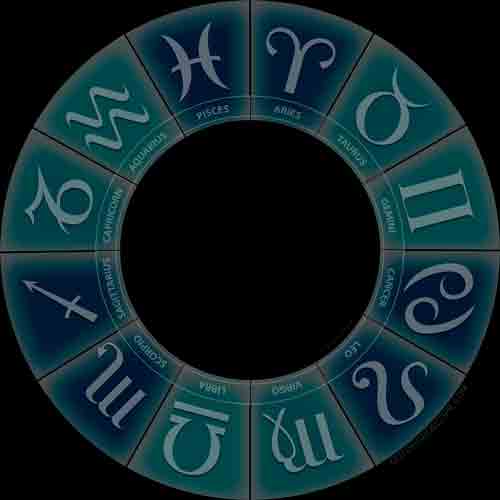
Choose your Zodiac sign for Tomorrow's Horoscope
Daily horoscope reading has lots of little advantages to offer the people that follow them regularly. It not only gives an insight into probable circumstances it delivers it with the personalities' typical characteristics in mind. Daily horoscopes have a mysterious degree of accuracy for forecasting day-to-day probabilities but this is not always their main benefit. They can also give the person browsing them the chance to acquaint themselves with their star sign personality type. Woven within the messages of many today horoscope predictions are subtle references to the conventional traits associated with each sign. So readers are treated to astrological forecasts and advice written as their particular zodiac sign would possibly think or view it.
It was the ancient Greek people that are thought to have first started the idea of people's destiny's being already determined at birth. They believed that a person's fate was influenced by and somehow connected to planetary positions. These ideologies planted the early seeds for the growth of Astrology as we know it today. Throughout history, there are a significant number of citations about the connection between planetary movement and eventful occurrences. The genius Albert Einstein once said that Astrology is like a life-giving elixir to mankind. He studied it intently and his conclusion of it was probably referring to the morale-boosting and gentle counseling benefits of its enlightenment.
The contents of a daily horoscope are generated from a combination of planet motion and myth and commonly recognized human characteristics. So they are a good mixture of information from Astronomy and Philosophy. Horoscopes can help you do things like set goals, show patience, seize opportunities, and overcome challenges, as well as a multitude of other things. They are similar to having a little guide to life that you can refer to whenever you need some optimism or sense of direction. Many individuals find them useful to help with understanding their usual behaviors and those of the people close to them. Daily horoscope readings are listed by sign and all the different signs are one below the other. This makes it easy to peruse other people's horoscope revelations as well as your own.
There are numerous benefits to consulting your daily horoscope on a regular basis aside from its foresight. As you browse through its content you should recognize little descriptions and remarks intertwined within it's about words about your personality. These frequent mentions of our likely reactions to things are great at reminding us how we appear to those around us. Fire signs like Aries, Leo, and Sagittarius will learn how really self-motivated they are. Earth signs who are Taurus, Virgo, or Capricorn will discover the strengths of their practicality. Air signs like Gemini, Libra, and Aquarius will realize the scope of their intelligence. Water signs who are the signs of Cancer, Scorpio, and Pisces will attain better control of their sensitivity.
Getting to know how others may be inclined to act and think can enable someone to interact with them more effectively. This is probably the reason why quite a few people tend to take a look at the horoscope of the person they are in a soul mate relationship with along with their own. It is a natural curiosity and part of the need to try and foresee our future and that of those we love. Daily horoscopes can divulge tiny pieces of character-related humor and advice that are revealing about the inner workings of an individual. The majority of today's horoscopes will contain some advisory comments regarding relationships whether you are single or attached.
Understanding yourself is one of the best lessons you can learn in life as it allows you to progress at a steady rate. By keeping an eye on your daily horoscope day by day you can see written down your usual approach to the world. It helps you become aware of the things you do and say that are done unconsciously. It makes you stop and think for a moment about certain kinds of behaviors and whether they are appropriate or advantageous. Centuries ago this sort of astrologically led personality referencing was assumed to be a result of legendary tales of the planet's different powers. Its services of foretelling fortunate times were mostly only the privilege of Kings or other much respected rich or powerful people.
A large section of modern horoscopes especially in women's magazines often focuses on relationships as the prominent theme. They know that our personal lives are often a cause for concern as we all want to be loved. Relationships of this type with others flourish more if the two people are compatible in the first place. If you know the signs you are supposed to be compatible with you can test out the reliability of this love advice knowledge. When people meet romantically they will often ask each other's star signs. This is because romantic interests are at times the thing that directed a person initially towards Astrology and its precision in partner compatibility and all affairs of the heart.
There are no definite guides to give unbiased support in life other than that we receive from our parents or guardians. We get no clues to people's personalities other than through family or group situations. Horoscopes supply an awareness that is not found anywhere else and can show with their wordage how to decipher some of life's puzzling events. Today horoscopes give light counsel that is conversational in its tone and are an indication of how the day ahead may go. When they are not helping you with relationship areas they are able to aid a person's choice of career. Their light-hearted glimpse of our personality qualities assists us in determining the most suitable jobs for our level of patience and versatility.
Having access to this cosmic advisor in the form of daily horoscopes can increase our perception of everything we see and hear. When we are having difficulty understanding something or someone they can be turned to for another way of looking at things. You do not have to search very far to locate a daily horoscope and how you interpret its message will be totally personal to you. These are generalized readings but their meanings if they are written expertly will be meaningful in differing ways. This is due to our strong individuality and highly independent thought that makes us human. Horoscopes dispense a fascinating mode of fortune-telling that has proved invaluable to people in learning about the differences between us.
🐍 Horoscope 2025, Chinese New Year of the Green Snake
Will you succeed by pulling the Tiger by it's tail during 2025? With help of the Chinese Horoscope 2025 and astrology overview for the year of Green Wood Snake, we can see more clearly what awaits us in 2025.
🎄 Horoscope 2025
More about the year of the Snake, Chinese Horoscopes 2025, and astrology forecasts for the 2025 year of Green Wood Snake:
More Horoscopes 2025 by spheres of interest:
GotoHoroscope's mobile App for your Zodiac sign. Available on Google Play
Google Play and the Google Play logo are trademarks of Google LLC.
Comments: Daily Horoscope
it refert to. Thanks
Pages: [1]